
Maximizing Efficiency with AI-Powered Project Management Software
QuickSummary / KeyTakeaways
- LeverageautonomousAIagentsforefficiency. Automating project...
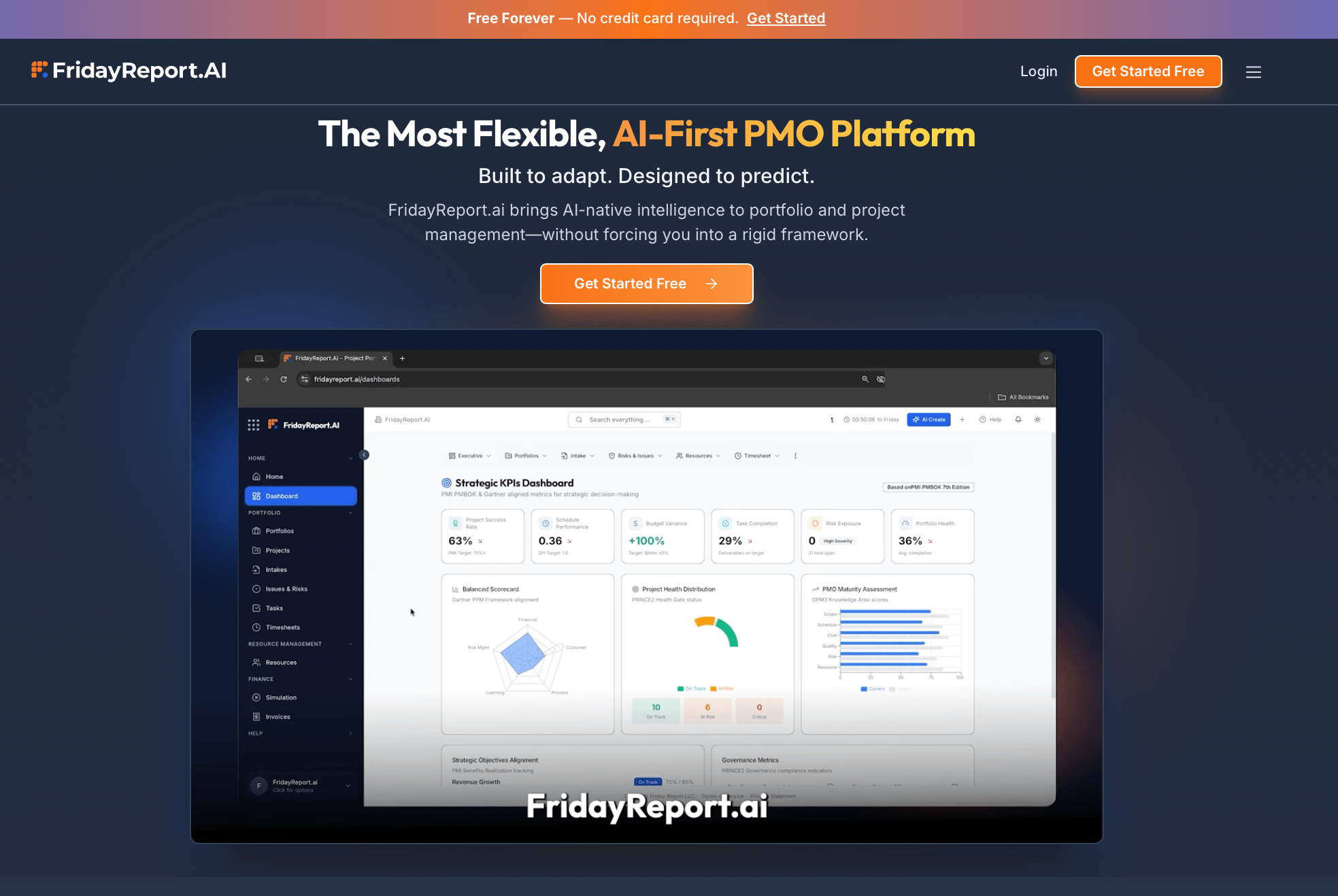
Discover how FridayReport.ai transforms project portfolio management with advanced AI features, comprehensive tools for PMOs, and ultimate flexibility. Learn about the best enterprise project management software today.
AI features enhance productivity. Project management software like FridayReport.ai integrates AI to automate tasks and streamline workflows, allowing teams to focus on strategic initiatives.
● Comprehensive tools for all project needs. With 38 features covering portfolio, project, and resource management, this software supports everything from resource planning to project invoicing.
● Real-time analytics and reporting. Advanced project reporting software offers insights that drive decision-making and improve project outcomes, making it essential for any enterprise.
● Flexibility without rigid frameworks. Unlike traditional solutions, FridayReport.ai adapts to your team's unique processes, ensuring seamless integration and a smoother project execution experience.
● Scalable for all business sizes. Whether for small teams or large enterprises, this project portfolio management software provides tailored solutions that grow with your business needs.
Project management can be a daunting task for teams of any size. The challenges of coordinating multiple projects, managing resources, and ensuring timely deliveries often lead to chaos and inefficiency.
When teams struggle with outdated tools or rigid frameworks, they risk missing deadlines, exceeding budgets, and ultimately losing the competitive edge in their industry. Ignoring these issues can lead to project failures and significant financial losses.
This guide explores the benefits of employing AI-powered project portfolio management software like FridayReport.ai. Learn how implementing modern solutions can transform project tracking, enhance reporting quality, and optimally utilize resources, leading to successful project outcomes.
|
Primary |
Secondary |
|
project management software |
AI project portfolio management software / project tracking software / project reporting software |
|
AI project portfolio management software |
project portfolio management (PPM) software / enterprise project management software / AI PMO platform |
|
project portfolio management (PPM) software |
project execution management platform / strategic project management software / project analytics software |
|
PMO software |
portfolio management tool for PMO / project reporting and tracking software / project health status |
|
enterprise project management software |
best enterprise project management software / project management software with AI features / Microsoft Project file import |
|
AI PMO platform |
AI portfolio management platform / project scoring / prioritization / risk assessment |
|
project reporting software |
dashboard & custom reports / timesheet entries & approval / milestone tracking |
|
project tracking software |
resource skills & capacity planning / demand vs. supply forecast / Kanban board view |
|
Factor |
Description |
|
AI Integration |
Incorporating AI features improves accuracy and efficiency. |
|
Feature Set |
Comprehensive tools cover all aspects of project management. |
|
User Experience |
Intuitive interfaces facilitate user adoption and engagement. |
|
Customization |
Ability to tailor tools to specific project needs. |
|
Scalability |
Supports businesses of various sizes and project complexities. |
|
Reporting Capabilities |
Advanced analytics and reporting for ongoing improvements. |
● Define your project goals. Clearly outline what you want to achieve with the implementation of a project management software. This will guide your search for the right solution.
● Evaluate team requirements. Assess your team’s specific needs, such as features for project tracking or reporting capabilities. Understanding this will ensure you choose software that fits your organizational context.
● Research available options. Take the time to explore different software solutions, comparing features, scalability, and pricing. This due diligence is essential to finding the best enterprise project management software for your needs.
● Plan for training and onboarding. Prepare a strategy to help your team adapt to the new software, including workflows, access permissions, and essential training sessions. Effective onboarding promotes quick adoption of the new system.
● Monitor software performance. Regularly assess the performance of your new project management solution to ensure it meets your expectations and delivers value. Track metrics like user engagement and project success rates.
● Collect user feedback. Actively seek input from team members on the software’s usability and functionality. This feedback will inform potential adjustments needed for better performance or user satisfaction.
● Update workflows as necessary. After observing how your team interacts with the software, be prepared to refine workflows that may need adjustments for optimal efficiency. Adjustments are vital for achieving desired project outcomes.
● Schedule ongoing training. As your team becomes more familiar with the software, offer continuous training sessions to explore advanced features and best practices. This investment maximizes use of the software’s capabilities.
1. What is project management software?
2. How does AI enhance project management tools?
3. Why is project portfolio management important?
4. What features should best enterprise project management software include?
5. How can AI project portfolio management software improve efficiency?
6. What are the advantages of project analytics software?
7. How does project reporting software support decision-making?
8. Why should businesses invest in an AI PMO platform?
9. What factors should influence your selection of PMO software?
10. How to compare different project management software?
11. What are the top features to prioritize in portfolio management tools?
12. Can project reporting and tracking software boost project success?
13. When should organizations adopt project management software?
14. What are the common challenges faced during implementation?
15. How to ensure effective use of project management software?
Project management software is a digital tool designed to help teams plan, execute, and maintain projects efficiently. These tools offer features for project scheduling, resource management, and collaboration, allowing teams to stay organized and meet deadlines.
Typically, project management software includes functionalities like task assignment, time tracking, and reporting. By incorporating these features into daily workflows, businesses can improve their project outcomes and resource efficiency.
Many solutions are customizable, ensuring they can align with an organization's specific processes and needs. Organizations must evaluate the best fit for their requirements to maximize benefits.
Real Results: A software firm in Chicago adopted a project management tool and reported a 30% increase in project completion rates as tasks became more visible and manageable.
Takeaway: Selecting the right project management software can greatly improve team efficiency and project success.
AI enhances project management tools by automating mundane tasks and providing intelligent insights. Features such as predictive analytics allow teams to anticipate risks and make data-driven decisions, improving overall project health and performance.
AI functionalities can include automated scheduling, resource allocation, and even risk assessment. By leveraging AI, project managers can redirect their focus towards strategic planning and leadership instead of manual task management.
This intelligence also allows for better data visualization, which aids in understanding project progress and areas that need attention. It can foster a more collaborative and informed decision-making environment.
Real Results: A construction company integrated AI-powered project management software and achieved a reduction in project delays by 25%. This resulted from enhanced predictive risk assessments and better resource management practices.
Takeaway: Embracing AI in project management significantly optimizes processes and reduces overall risk.
Back to Table of Contents
Project portfolio management (PPM) is crucial as it enables organizations to align projects with strategic business objectives. By managing multiple projects as a cohesive portfolio, businesses can allocate resources effectively and prioritize initiatives based on their strategic importance.
PPM helps in identifying and mitigating risks across projects, ensuring that resource allocation aligns with the company's vision. It also aids in reporting and tracking the overall health of the portfolio.
Organizations leveraging PPM can enhance decision-making, leading to better strategic alignment and successful project outcomes. Successful PPM results in optimized use of resources and heightened organizational performance.
Real Results: A tech startup employed PPM strategies and saw a marked increase in project ROI, with 40% of their projects directly supporting key business objectives.
Takeaway: Effective project portfolio management aligns strategic goals with daily operations, enhancing performance and outcomes.
The best enterprise project management software should encompass a wide range of features to meet diverse project needs. Essential features include task management, resource planning, real-time reporting, and collaboration tools, all tailored to facilitate complex project environments.
Moreover, integration capabilities with other business systems, such as CRM or financial software, are vital for seamless data flow and comprehensive project oversight. Customization options are also important, allowing teams to adapt the software to their specific workflows and processes.
Finally, user-friendly interfaces that support mobility and collaborative work environments can significantly improve software adoption and overall effectiveness. Selecting software with these features ensures cohesive project execution and management.
Real Results: A global corporation upgraded its enterprise project management solution, incorporating advanced reporting features, resulting in a 50% reduction in miscommunication on project deliverables.
Takeaway: Choosing software with comprehensive and adaptable features is crucial for enterprise project management success.
AI project portfolio management software can significantly enhance efficiency by automating routine tasks and optimizing resource allocation. With AI capabilities, project managers can anticipate project risks, allocate resources more effectively, and streamline communication among project teams.
Automation of data entry and tracking reduces manual errors and allows teams to focus on high-value tasks. This increased focus on essential work leads to improved productivity and outcomes across projects.
Furthermore, AI-driven insights help in prioritizing projects that align best with organizational goals, ensuring that resources are dedicated to the most critical initiatives. This results in strategic agility and greater overall efficiency.
Real Results: An automotive company implementing AI in their project management processes reported a 35% increase in project throughput due to better resource management and risk mitigation.
Takeaway: AI integration can dramatically increase project efficiency through automation and smart insights.
Project analytics software provides deep insights into project performance and management practices. These tools allow teams to examine data trends over time, uncovering areas of improvement and informing future project strategies.
Utilizing real-time data analysis can improve decision-making, helping to quickly identify bottlenecks or resource constraints. The ability to forecast project outcomes based on historical data enhances the organization's capability to plan strategically.
Effective use of project analytics can lead to better risk management, improving project delivery times and overall success rates. The insights gained are invaluable for continuous improvement across the organization.
Real Results: A healthcare organization utilized project analytics software and identified inefficiencies, improving their project completion rates by 40% within a year.
Takeaway: Leveraging project analytics enhances visibility, promotes proactive decision-making, and drives project success.
Project reporting software bolsters decision-making by providing clear, actionable insights into project health. By consolidating data from various project elements, these tools create comprehensive reports that visualize project progress and potential challenges.
Timely and accurate reporting ensures that project managers can make informed decisions based on real-time data. This capability is critical for identifying trends, understanding performance metrics, and validating project forecasts to stakeholders.
Furthermore, enhanced transparency due to reporting fosters accountability among team members, as they can track their contributions to overall project goals. This shared visibility drives engagement and encourages proactive problem-solving along the way.
Real Results: A marketing agency implemented project reporting software, resulting in clearer communication of project status and a 20% decrease in delays due to improved oversight.
Takeaway: Effective project reporting supports smarter decision-making and enhances project accountability.
Investing in an AI PMO platform enables businesses to harness the power of data-driven insights to improve project outcomes. These platforms utilize AI capabilities to enhance risk management and forecasting, ensuring that PMOs operate more strategically amidst the complexities of multiple projects.
The adoption of AI leads to obtaining real-time insights for more agile project management, all while fostering collaborative work environments. This system also allows for better alignment between projects and organizational strategy, improving overall business performance.
In essence, an AI PMO platform provides a competitive edge through improved operational efficiencies, informed decision-making, and ultimately successful project delivery.
Real Results: A multinational corporation that adopted an AI PMO platform reported a significant increase in project success rates, attributed to enhanced predictive capabilities and strategic resource allocation.
Takeaway: AI PMO platforms are critical for organizations looking to improve project outcomes through data-driven decision-making.
Several factors should influence the selection of PMO software, starting with the feature set. Organizations should prioritize software that includes comprehensive project management tools, including Gantt charts, Kanban boards, and customizable reporting options to meet specific needs.
Moreover, consider scalability, ensuring the software can grow with the organization and adapt to changing project demands. Integration capabilities with other essential business tools also play a crucial role in streamlining workflows across departments.
Lastly, evaluate the vendor's support and training resources to ensure the software is implemented successfully and utilized effectively across the organization.
Real Results: A financial institution that carefully evaluated PMO software options reported smoother integrations and increased user satisfaction after selecting a solution that met their specific requirements.
Takeaway: Thorough evaluations are critical to selecting PMO software that aligns with your organization's operational needs.
Comparing different project management software entails evaluating features, pricing, usability, and support services. Create a comparison matrix to highlight the functionalities of each software, such as task management, analytics capabilities, and mobile access.
Additionally, consider pricing models, assessing whether they fit your budget based on your team's size and anticipated usage. It's also essential to review user interfaces to ensure ease of use and adoption by team members.
Finally, examine customer support and community resources available for troubleshooting and further learning opportunities. This comprehensive comparison will lead to a well-informed decision.
Real Results: A small business implemented a thorough comparison strategy before selecting project management software, ultimately choosing one that led to a 50% increase in team productivity due to better tool alignment with their needs.
Takeaway: Effective comparisons are critical in selecting the right project management software for organizational efficiency.
When prioritizing features in portfolio management tools, focus on capabilities like real-time data analytics, project scoring, and prioritization functionalities. These features ensure that project managers can continuously assess the value of each project relative to the organization’s strategic goals.
Another important aspect is customizable dashboards for easier visualization of key performance indicators (KPIs) and project metrics. This allows stakeholders to quickly gauge portfolio health and performance without cumbersome reports.
Additionally, effective risk management tools are vital, providing the means to assess potential project risks and mitigation strategies to keep initiatives on track.
Real Results: An IT firm that implemented robust portfolio management tools improved project prioritization, which led to a 30% increase in alignment with corporate strategies over 12 months.
Takeaway: Focusing on essential features in portfolio management tools optimizes project alignment with strategic objectives.
Yes, project reporting and tracking software can significantly enhance project success. By providing real-time updates and comprehensive reports, these tools increase transparency and accountability among team members, leading to more informed decision-making.
Effective project tracking allows teams to identify delays or issues early, while reporting tools facilitate communication with stakeholders about progress and performance against expectations. This dual approach ensures that necessary adjustments can be made promptly to steer projects back on course.
Ultimately, the combination of tracking, reporting, and analytics fosters an environment of continuous improvement, which is crucial for achieving project success.
Real Results: A nonprofit organization implemented project reporting software and saw a 40% increase in successful project completions due to enhanced communication and proactive issue resolution.
Takeaway: Implementing project reporting and tracking software is essential for optimizing project success rates.
Organizations should consider adoption of project management software when managing multiple concurrent projects becomes overwhelming. Signs such as missed deadlines, budget overruns, and poor inter-team communication often indicate a need for more structured project management tools.
Additionally, if existing tools are insufficient for tracking project progress or resource allocation, it is time to evaluate more comprehensive solutions. Implementing project management software proactively can prevent potential project failures and bolster organizational effectiveness.
Ultimately, early adoption fosters better alignment of projects with organizational goals and enhances overall productivity from the outset.
Real Results: A nonprofit organization adopted project management software before a major initiative and successfully completed the project 2 months ahead of schedule, highlighting the importance of early implementation.
Takeaway: Identifying the right time for software adoption is crucial to preventing project mismanagement.
Common challenges facing organizations during implementation include resistance to change and a lack of user training. Successfully integrating new software requires buy-in from both management and end users to ensure that the software is utilized effectively.
Another challenge can be data migration, as organizations must ensure that historical data is transferred accurately into the new software. Without proper planning and resources, inaccuracies can lead to decision-making based on incomplete data.
Ultimately, addressing these challenges through strategies such as change management and continuous training can lead to successful implementations and high user retention rates.
Real Results: A medium-sized business focused on user engagement during its software rollout, resulting in high adoption rates and a successful project management transformation with minimal hiccups.
Takeaway: Proactive management of challenges can greatly improve the success rates of project management software implementation.
To ensure effective use of project management software, organizations should invest in ongoing training and create a feedback loop for users. Regular training sessions can help users stay updated on new features and optimize usage for their specific roles.
Additionally, teams should be encouraged to provide feedback concerning the software’s usability and required features. Regularly reviewing this feedback allows organizations to fine-tune software usage, improving overall system efficiency.
Lastly, management should foster a culture of collaboration, using the software as a platform for team communication and coordination. This holistic approach maximizes the capabilities of the software and supports successful project outcomes.
Real Results: A consulting firm implemented regular training and feedback sessions, leading to a 60% increase in positive user engagement and satisfaction with the project management software.
Takeaway: Ongoing training and feedback are critical for maximizing the effectiveness of project management software.
Project management software, AI project portfolio management software, project portfolio management (PPM) software, PMO software, enterprise project management software, AI PMO platform, project reporting software, project tracking software, project analytics software, AI portfolio management platform, enterprise project reporting platform, portfolio management tool for PMO, strategic project management software, project execution management platform, best enterprise project management software, project management software with AI features, AI PMO platform for portfolio management, project reporting and tracking software, What is AI project portfolio management software?

USA Headquarters:
240 N Washington Bvrd., Suite 303,
Sarasota, FL 34236
Phone: +1 941-584-9323
Email: info@trusteditgroup.com
Portugal Office:
Trusted IT Group
Rua da Cooperativa Agrícola Bloco D, 4A
9050-555, Funchal
Phone: +351 965863641
Email: info@trusteditgroup.com
