Quick Summary
● Define a common core. Establish a minimum viable standard for project approval requirements, milestone definitions, and change requests. This ensures cross-department project management consistency without stifling departmental agility.
● Allow departmental flexibility. Permit teams to adapt internal workflows and task execution to their specific operational needs. A rigid approach that forces identical workflows often leads to frustration and poor adoption of PMO standards.
● Scale requirements by size. Keep governance proportionate to the project's complexity and risk level. Smaller initiatives should not be burdened with the same heavy documentation as enterprise-wide programs.
● Standardize reporting metrics. Create a unified language for project health, budget variance, and schedule reliability. This allows PMO directors to compare initiatives accurately across the entire portfolio.
● Roll out in phases. Introduce standardized project management processes gradually through pilot programs. Gathering feedback and adjusting the baseline ensures long-term adherence and continuous improvement.
Introduction
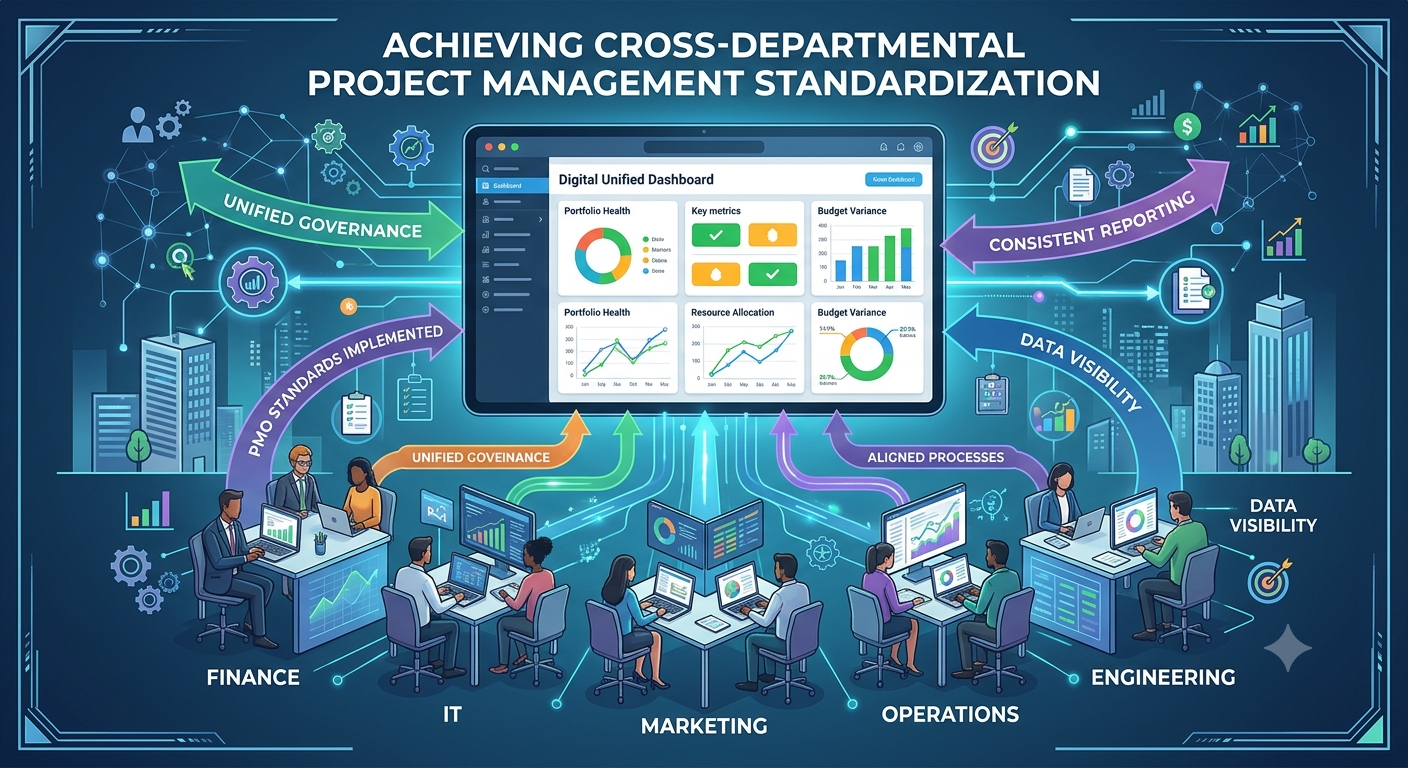
Achieving project management standardization across an enterprise requires a delicate balance between unified governance and departmental autonomy. When organizations scale, disparate teams often develop isolated workflows that make portfolio visibility nearly impossible. A Project Management Office (PMO) must bridge this gap by establishing a shared operational language.
Implementing standardized project management processes does not mean forcing every department into an identical mold. Instead, it involves defining a practical baseline for critical touchpoints like project approval requirements, milestone definitions, and change requests. This common core provides decision-makers with comparable data while leaving room for teams to execute tasks using their preferred internal methods.
To maintain agility, PMO standards must remain proportionate to project size and complexity. Overburdening small initiatives with heavy governance leads to inefficiency and resistance. By focusing on cross-department project management consistency at the portfolio level, business leaders can ensure strategic alignment without sacrificing execution speed.
|
Primary
|
Secondary
|
|
project management standardization
|
standardized project management processes / PMO standards/project management consistency
|
|
cross-department project management
|
multi-department project alignment/enterprise project governance / shared project practices
|
|
PMO standards
|
PMO governance framework/project management office guidelines / PMO baseline requirements
|
|
project management consistency
|
consistent project delivery / uniform project tracking / standardized portfolio management
|
|
standardized project management processes
|
common project lifecycle / unified project workflows/baseline project methodologies
|
Key Factors Overview
|
Factor
|
Description
|
|
Project Approval Requirements
|
Establishing uniform criteria for intake and authorization ensures all initiatives align with strategic goals before resources are committed.
|
|
Milestone Definitions
|
Creating a common lifecycle with recognizable phases allows leadership to track progress consistently across diverse departmental projects.
|
|
Change Requests
|
Standardizing how scope, budget, and timeline changes are requested and approved maintains control over portfolio risk and resource allocation.
|
|
Completion Criteria
|
Defining clear, shared metrics for what constitutes a finished deliverable prevents scope creep and ensures quality alignment.
|
|
Governance Scaling
|
Adjusting the level of required documentation and oversight based on project size keeps smaller initiatives agile and manageable.
|
Before Checklist
● Assess current workflows. Review how different departments currently manage their initiatives to understand existing maturity levels. This helps identify which practices are already working well and where gaps in visibility exist.
● Identify common pain points. Speak with department heads to uncover bottlenecks caused by misaligned cross-department project management. Understanding these friction points ensures the new standards solve actual business problems.
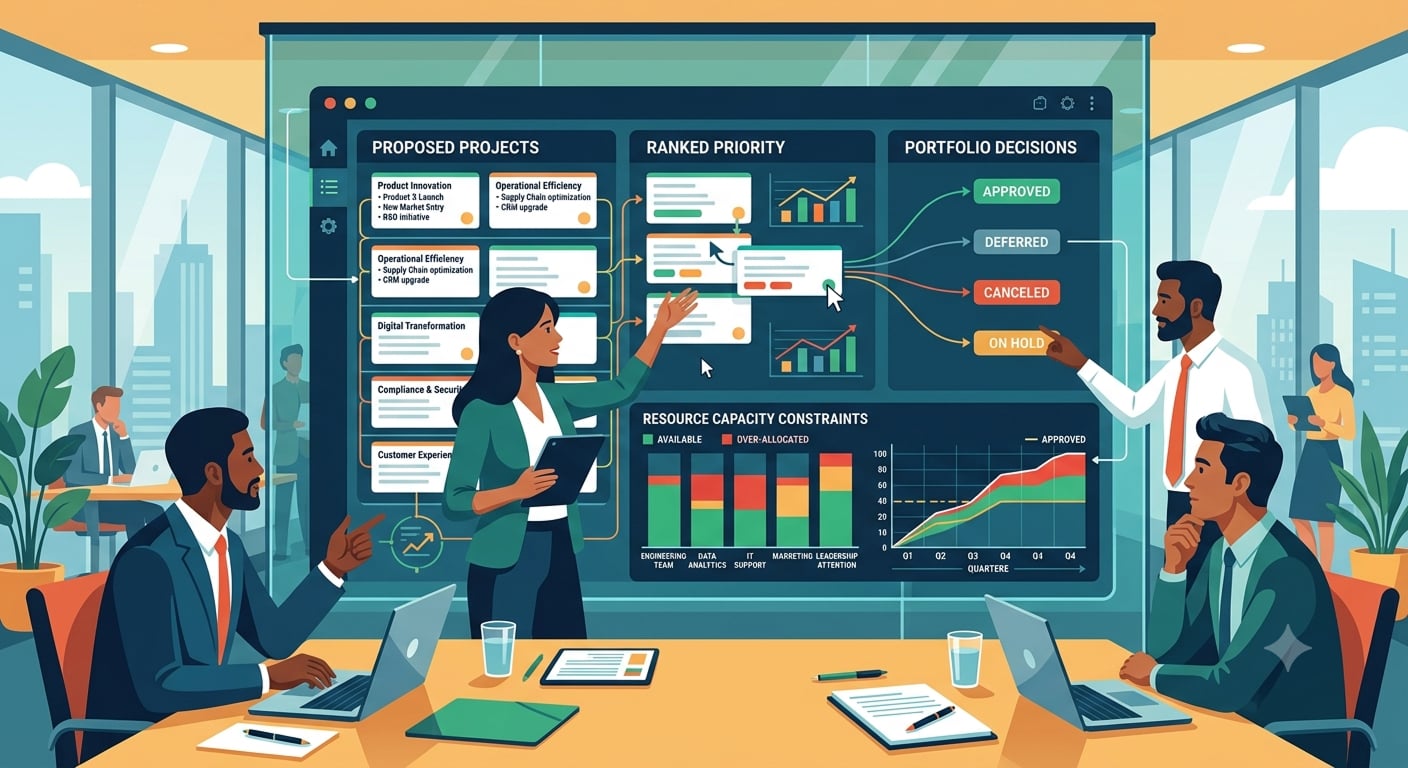
● Define the minimum viable standard. Determine the absolute essential data points required for portfolio-level decision-making. Focus on standardizing project approval requirements, milestone definitions, and change requests first.
● Secure executive sponsorship. Obtain clear backing from senior leadership to enforce the new PMO standards. Executive endorsement provides the authority needed to guide project management activities across the enterprise.
After Checklist
● Monitor adoption rates. Track how consistently departments are applying the standardized project management processes. Look for areas where teams are bypassing the framework to identify potential process flaws.
● Gather departmental feedback. Conduct regular reviews with project managers to understand how the standards impact their daily work. Use this input to refine the balance between mandatory governance and departmental flexibility.
● Refine governance scaling. Evaluate whether the documentation requirements are appropriately matched to project sizes. Adjust the criteria if smaller projects are experiencing unnecessary delays due to heavy oversight.
● Review portfolio visibility. Assess whether business leaders now have the comparable data needed to make informed strategic decisions. Ensure that consistent terminology and reporting metrics are providing a clear picture of portfolio health.
Table of Contents
SECTION 1: Establishing the Baseline
1. Why is project management standardization critical for cross-departmental initiatives?
2. What core practices should a PMO mandate across the entire organization?
3. How can a PMO scale governance requirements based on project size?
SECTION 2: Balancing Consistency and Flexibility
4. Can departments maintain their own internal workflows under PMO standards?
5. When should a PMO allow exceptions to standardized project management processes?
6. How do business leaders measure the success of project management consistency?
SECTION: ESTABLISHING THE BASELINE
FAQ 1: Why is project management standardization critical for cross-departmental initiatives?
Project management standardization creates a unified operational language that enables accurate portfolio visibility and resource alignment.
Without a common framework, different departments use varying terminology, processes, and data structures, which hinders collaboration and cross-project management. Establishing PMO standards ensures that decision-makers can compare initiatives accurately and allocate resources effectively. This consistency reduces duplication of effort and aligns all departmental work with overarching business strategies, as noted in [Standardizing Project Management: Successfully Align Processes, Methods, and Tools](https://www.projektron.de/en/blog/details/standardizing-project-management-4248).
Real Results: An organization that implemented consistent terminology and status logic reduced the time spent consolidating portfolio reports by establishing a single source of truth for project health.
Takeaway: Standardization provides the clarity and comparability necessary for effective multi-project management.
FAQ 2: What core practices should a PMO mandate across the entire organization?
A PMO should mandate practices that directly impact portfolio visibility, such as project approval requirements, milestone definitions, and change requests.
These core elements form the minimum viable standard required for coordination, reporting, and decision-making. By defining a common lifecycle—such as intake, planning, execution, and review—leadership gains a consistent way to track progress across diverse teams. Mandating these specific touchpoints ensures project management consistency without dictating the granular details of daily task execution, according to [Standardizing Project Work Across Multiple Teams](https://www.kanbanchi.com/blog/how-to-standardize-project-work-across-multiple-teams).
Real Results: A manufacturing firm standardized its project phases and deliverable requirements, which immediately improved schedule reliability and controlled project expenditures across its industrial site.
Takeaway: Focus mandatory standards on the high-level milestones and approvals needed for strategic oversight.
FAQ 3: How can a PMO scale governance requirements based on project size?
A PMO scales governance by categorizing projects by complexity and assigning proportionate documentation and approval requirements to each tier.
Large, high-risk enterprise programs require rigorous oversight, extensive risk registers, and multi-level change request approvals. Conversely, smaller departmental initiatives should utilize streamlined templates and expedited approval paths to remain agile. This scalable approach ensures that standardized project management processes facilitate work rather than creating unnecessary bureaucratic bottlenecks.
Real Results: A financial services company created a three-tier governance model, allowing small internal updates to bypass formal steering committee reviews while maintaining strict oversight for regulatory projects.
Takeaway: Proportionate governance keeps small projects moving quickly while protecting the organization from high-level risks.
SECTION: BALANCING CONSISTENCY AND FLEXIBILITY
FAQ 4: Can departments maintain their own internal workflows under PMO standards?
Yes, departments can and should maintain their own internal workflows as long as they map back to the PMO's high-level milestones.
Standardizing project management means establishing common rules for reporting and data structures, making projects comparable without forcing them to be identical. A marketing team might use an iterative, visual board for daily tasks, while an engineering team uses a sequential approach. As long as both teams report on the same core metrics and adhere to the shared project approval requirements, cross-department project management remains effective.
Real Results: A technology firm allowed its software developers to retain their agile sprints while requiring them to map their progress to the PMO's standardized quarterly milestones for executive reporting.
Takeaway: Flexibility in execution drives adoption, provided the overarching reporting framework remains consistent.
FAQ 5: When should a PMO allow exceptions to standardized project management processes?
Exceptions should be granted when strict adherence to PMO standards would introduce unacceptable delays or risks to highly specialized or urgent initiatives.
While project management consistency is the goal, rigid adherence can sometimes stifle innovation or hinder rapid response to market changes. A PMO should establish a formal variance request process where teams can justify why a specific standard is detrimental to their project. This ensures that flexibility is managed and documented rather than resulting in rogue, untracked workflows.
Real Results: A healthcare provider temporarily waived standard intake documentation for an emergency compliance update, allowing the team to begin work immediately while backfilling the required reporting later.
Takeaway: Managed exceptions prevent PMO standards from becoming a barrier to critical business agility.
FAQ 6: How do business leaders measure the success of project management consistency?
Success is measured through improvements in schedule reliability, budget variance, and the reduction of cross-team dependency conflicts.
When standardized project management processes are effective, organizations see a decrease in schedule drift and uncontrolled expenditures. PMO directors can track adoption rates and evaluate whether the centralized data provides a clear, accurate forecast of future projects. Ultimately, the value of PMO standards is proven when executive leadership can confidently make portfolio decisions based on reliable, comparable data, as highlighted in [Building Consistent PMO Standards and Process Improvement](https://planisware.com/resources/project-management-office-pmo/how-build-consistent-pmo-standards-and-accelerate-process).
Real Results: An enterprise PMO tracked its budget variance over twelve months and found that standardized change request processes reduced unexpected project overruns by a significant margin.
Takeaway: Consistent practices directly translate into predictable project delivery and reliable financial forecasting.