Juggling multiple projects, meeting tight deadlines, and keeping stakeholders happy isn’t easy. As a project manager, you’re expected to balance budgets, assign tasks, and make sure deliverables meet client expectations—while keeping everything running smoothly. So, how do you stay ahead of the curve? Effective project pipeline management.
“It helps you identify roadblocks, manage resources efficiently, and maintain control over timelines. Without a clear pipeline, projects can quickly veer off track, leading to missed deadlines and wasted resources.”
In this blog post, we’ll break down the essentials of project pipeline management, explore best practices, and answer key questions to help you take control of your project workflow.
What is a Project Pipeline? What is Project Pipeline Management?
A project pipeline is your project's roadmap, clearly showing every stage a project moves through—from the initial idea to its successful completion.
It provides instant insight into your project's current status, allowing managers and team members to quickly see progress, spot bottlenecks, and make informed decisions at every step.
Project pipeline management is your tool for keeping project chaos under control. It helps you pick, prioritize, and oversee the right projects from start to finish. You make sure you aren't wasting resources on projects that don't deliver real value.
The Components of Effective Project Pipeline Management
Effective project pipeline management boils down to a few critical elements:
- Defined project objectives: Clearly set what each project aims to achieve from day one.
- Stage tracking: Keep a close eye as your projects move through planning, execution, monitoring, and final wrap-up.
- Task delegation: Make sure tasks land with the right people to avoid confusion and delays.
- Proactive risk management: Identify risks early and always have a backup plan ready.
- Consistent communication: Maintain open channels with everyone involved, from team members to top stakeholders.
|
Discover which technology to use to drive better project outcomes:
|
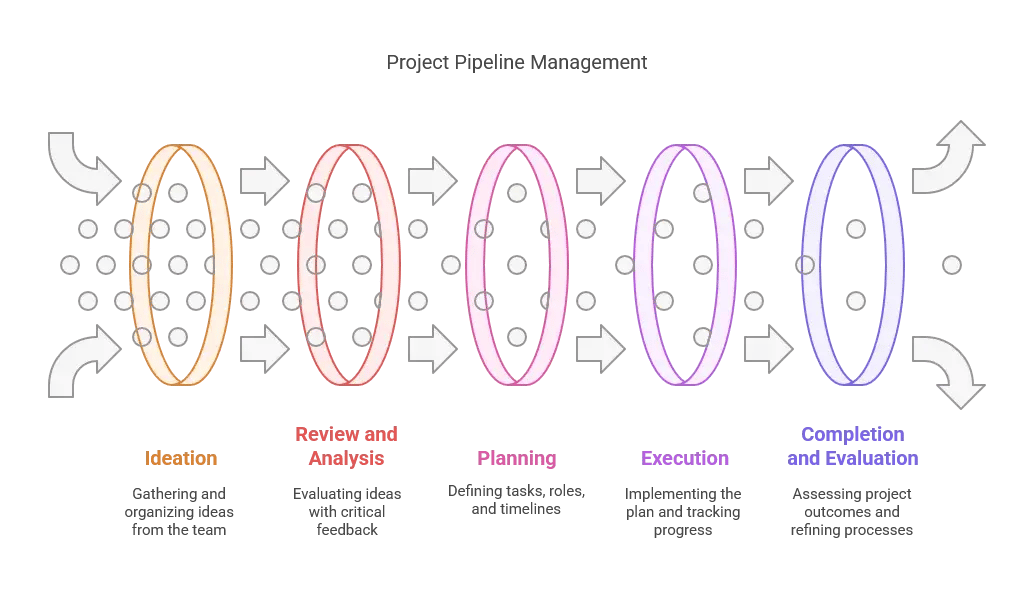
The Five Stages of Project Pipeline Management
When you leverage effective project management, your projects are 2.5 times more successful. Effective project pipeline management requires breaking down the process into manageable stages. By understanding and optimizing each phase, you can improve project success rates, align team efforts, and ensure consistent delivery.
1. Ideation
The first step in project pipeline development? The ideation phase.
This is where you gather ideas from your team, exploring opportunities, and brainstorming potential projects that align with business goals. Don’t limit this phase to a few voices—encourage input from across departments to get diverse perspectives. Sometimes the most innovative ideas come from unexpected sources.
- Use project management platforms to capture and organize ideas.
- Document critical details, such as the idea's origin, feedback received, and potential challenges.
- Filter out ideas that don’t align with timelines, budgets, or overall objectives to focus on viable options.
2. Review and Analysis
Not every idea deserves a green light. The review and analysis stage ensures only the most promising concepts move forward as part of your project management pipeline process. This is where you present ideas to clients, stakeholders, and decision-makers for critical feedback. Discussions in this phase focus on budget, scope, desired outcomes, and potential risks.
Elevate Your Project Pipeline with Customized PPM Solutions
Refine your project pipeline with expert solutions—from implementing PPM365 to optimizing MS Project Online (MSPO).
Get Started
3. Planning
Once an idea is approved, the planning phase kicks off. This is where you break down the project into specific tasks, assign responsibilities, and set timelines. Without a clear plan, even the best ideas can falter. Successful planning keeps everyone aligned and minimizes risks.
- Define team roles and assign tasks based on expertise
- Develop a task hierarchy with milestones and deadlines.
- Schedule regular check-ins to track progress and address potential bottlenecks.
- Share the finalized plan with the entire team to ensure clarity and alignment.
4. Execution
This is where strategy meets execution. During the project execution phase, teams bring the plan to life. Since this is often the most dynamic and demanding phase, staying on top of task status, tracking performance, and addressing challenges is critical.
- Hold regular team meetings to ensure alignment and discuss challenges/
- Monitor key performance indicators (KPIs) to measure success and course-correct when necessary.
- Keep stakeholders informed with timely progress reports to maintain trust and transparency.
5. Completion and Evaluation
This stage is a key part of the how to do a project management pipeline—this is an opportunity to assess, refine, and improve. Once the project is delivered to the client, conduct a thorough evaluation to identify what worked, what didn’t, and how future projects can benefit.
- Conduct a debrief with the team to gather insights and document lessons learned.
- Recognize and reward top contributors to boost team morale.
- Analyze project performance to refine future processes and enhance overall pipeline management.
Best Practices for Managing Your Project Pipeline
Strong project pipeline management doesn’t happen by chance—it requires a structured approach and adherence to proven strategies.
1. Leverage Project Management Tools for Efficiency
Project management tools are essential for simplifying workflows, improving collaboration, and keeping projects on track. These platforms streamline every phase, from brainstorming ideas to final project delivery. They also provide visibility into task progress, resource availability, and bottlenecks.
Choose a platform that fits your team’s workflow and integrates with existing systems to avoid disruptions. Regularly update project status to ensure team alignment and prevent miscommunication.
We recommend:
- PPM365: Built on Microsoft 365 and Planner, PPM365 eliminates per-user licensing fees, providing a cost-effective solution that scales with your business.
- Microsoft Project Online (MSPO): MSPO offers powerful portfolio and project management capabilities, enabling teams to plan, execute, and track project performance.
- Power PPM: Power PPM integrates with Microsoft platforms and offers customizable features that enhance visibility into project portfolios.
2. Prioritize Projects Based on Impact and Feasibility
Not all projects have the same level of importance or potential impact. Prioritizing high-value projects ensures that resources are allocated where they’ll make the biggest difference. Establish clear project goals aligned with organizational objectives—whether that’s launching a new product, expanding your service offerings, or driving revenue growth.
Regularly reassess project priorities based on evolving business needs and available resources to prevent overloading your team.
3. Conduct Regular Pipeline Reviews for Agility
Project pipelines need ongoing attention. Establishing a consistent review cycle—whether weekly, monthly, or quarterly—helps you stay adaptable. Frequent reviews provide the opportunity to assess progress, identify risks, and realign projects with shifting business goals.
Document changes to your pipeline and the rationale behind each decision. This practice improves future decision-making and ensures transparency for stakeholders.
4. Assess Resource Capacity Before Committing
Successful project completion hinges on having the right resources available at the right time. Before committing to any project, assess your team’s bandwidth and skill sets to ensure tasks can be executed efficiently. Misjudging resource availability can lead to missed deadlines and diminished project outcomes.
Conduct a capacity analysis before approving new projects to avoid overloading your team and compromising quality.
5. Use Data to Drive Decision-Making and Improvements
Data is your most valuable ally when it comes to refining project pipeline management. By analyzing trends and identifying patterns, you gain valuable insights into project performance, resource efficiency, and potential roadblocks. Leverage this information to make smarter decisions and continuously optimize your pipeline.
Use historical data to predict project timelines and resource needs more accurately, ensuring smoother execution moving forward.
Implementing best practices can dramatically improve your project pipeline, but maximizing its full potential requires expert guidance and the right tools. That’s where TIG comes in.
Maximize Your Project Pipeline with TIG’s PPM Expertise
Work with PhD-level consultants for end-to-end Project & Portfolio Management (PPM) solutions, including Microsoft Project tools customization, MS Project Online (MSPO) implementation, and support for PPM365—TIG’s proprietary solution built on Microsoft 365 and Planner.
If you need ongoing PMO support, PPM adoption, or change management, TIG delivers tailored solutions that align with your goals. Schedule a consultation today to optimize your pipeline.
Discover how to elevate your pipeline in project management. Schedule a consultation today.